
From Raw Steel to Surgical Steel: A Look Inside Our Manufacturing Process.
6 min read · September 15, 2026 · Zaki Industries Blogs
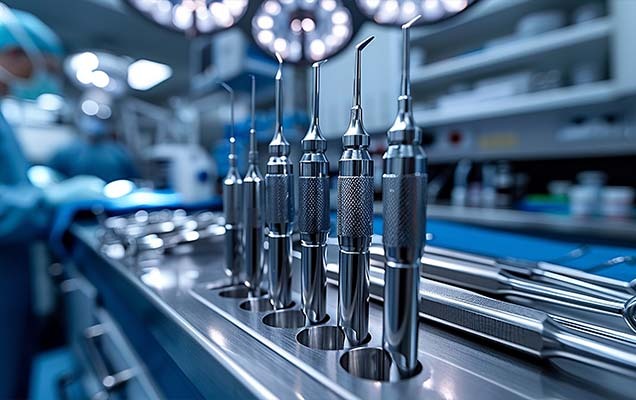
Every scissor, forceps, or bone cutter we make starts as a plain steel blank — and becomes a precision surgical tool only after a long, exacting process most people never see.
Cutting and shaping. Raw stainless steel is cut to rough shape, then forged or milled to bring it close to its final form.
Grinding and profiling. Skilled craftsmen grind each piece to its precise contour — this is where an instrument's balance and feel begin to take shape. It's meticulous, spark-flying work that can't be rushed.
Hardening and tempering. Heat treatment brings the steel to the correct hardness — hard enough to hold an edge, tempered enough to resist snapping under stress.
Assembly and joint fitting. For jointed instruments, box locks and screw joints are hand-fitted so the action is smooth with no play.
Polishing and finishing. Instruments are polished to a satin or mirror finish, then inspected for surface defects invisible to the untrained eye.
Quality control and certification. Every batch is checked against ISO 13485 and CE/MDR standards before packaging — nothing ships without passing inspection.
It's a process built on decades of craftsmanship, not shortcuts. The next time you pick up one of our instruments, know that dozens of careful hands — and a fair amount of sparks — went into making it exactly right.
